The Hairspray Heist That Cracked Antwerp's Safest Vault
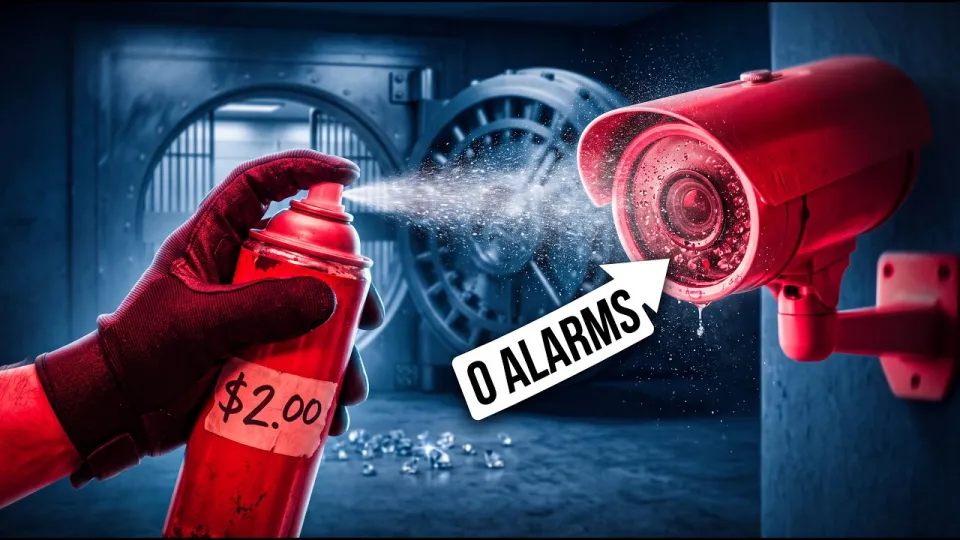
Video: How a $2 Can of Hairspray Robbed the World’s Safest Vault (crime story)
A crime story worth telling begins with an unlikely hero: a cheap aerosol can. In February 2003, a crew entered the Antwerp Diamond Center and emptied dozens of safe-deposit boxes holding an estimated $100 million or more in diamonds and jewelry, leaving no signs of forced entry. The case became famous less for the size of the haul than for the method — a $2 can of hairspray that helped blind the vault's sensors.
What made the Antwerp Diamond Center so secure
The Antwerp Diamond Center sat in the heart of the world's diamond trade, and its vault was built to be effectively untouchable. The building layered security in ways that most commercial vaults never attempt.
- Seismic sensors designed to detect drilling, cutting, and heavy impact on the vault structure.
- Magnetic-field detectors meant to catch any tool or device that disturbed the room's electromagnetic environment.
- Infrared heat and motion sensors watching the vault interior for body heat and movement.
- Multiple locked doors, a private elevator, and a guard post controlling access to the underground vault level.
- Safe-deposit boxes rented by diamond dealers, traders, and cutters who stored stones and cash inside.
On paper, the setup should have made the crime story impossible. The vault's defenders assumed that anyone trying to break in would trip at least one layer of detection long before reaching the boxes.
How a can of hairspray defeated the sensors
The crew's advantage was knowledge: they understood how each sensor worked and attacked the gaps between them. The hairspray was not a weapon or a disguise — it was a countermeasure against the vault's heat and motion detection.
- Reconnaissance. The crew reportedly studied the vault, its alarm logic, and the habits of guards and tenants over an extended period, gathering the details that made a clean entry possible.
- Disabling the alarm path. Before entering, they interfered with the alarm system so that signals from the vault would not reach the monitoring company as expected.
- Blinding the infrared sensors. A film of hairspray applied over the lenses of heat and motion detectors left the sensors unable to register movement or body heat inside the room.
- Entering without force. With detection neutralized, the crew opened the vault and the safe-deposit boxes using keys, codes, and lock-picking rather than drills or explosives — which is why investigators found no signs of forced entry.
- Working at leisure. Because the alarms stayed quiet, the thieves could spend hours inside, sorting through boxes and taking only what was worth carrying.
The hairspray detail is what turned an ordinary burglary into a legend: a two-dollar consumer product rendering a multi-million-dollar security system useless.
The trash trail that broke the case
The crime story unraveled not inside the vault but on a roadside. The crew's discipline failed during the getaway, when evidence was discarded instead of destroyed.
- Investigators recovered trash left behind by the suspects, including items that carried DNA and other trace evidence.
- That material pointed to Leonardo Notarbartolo, an Italian man with ties to organized crime circles, who became the central figure in the investigation.
- Surveillance footage and phone records helped prosecutors build a timeline linking Notarbartolo and accomplices to the break-in.
- Notarbartolo was convicted and sentenced to prison in Belgium; other alleged members of the crew faced their own legal consequences.
The contrast is stark: a plan precise enough to beat seismic and magnetic sensors collapsed because nobody thought carefully about a garbage bag.
Why most of the diamonds were never recovered
Recovering stolen diamonds is notoriously difficult, and this case followed the pattern. The stones were small, untraceable once removed from their settings, and easy to move through established diamond-trading channels.
- Loose diamonds carry no serial numbers; once certificates and packaging are separated from the stones, ownership is nearly impossible to prove.
- Antwerp's trade networks are international, so gems can cross borders quickly and blend into legitimate inventory.
- Belgian authorities recovered only a fraction of the estimated haul, leaving the majority of the jewels unaccounted for.
That gap is why the Antwerp vault job is often described as one of the most successful heists on record — the thieves got in, got out, and kept most of the profit even after the arrests.
The lessons security experts took from the heist
The Antwerp case changed how vault operators think about layered protection. Its core lesson is that sophisticated systems fail when their assumptions are wrong.
- Sensors can be sabotaged physically. A detector that can be sprayed, covered, or blocked is only as good as its housing and maintenance checks.
- Redundancy matters. Alarm paths that can be cut or spoofed need independent backups that report failure, not silence.
- Human intelligence beats hardware. The crew won because it knew the system; security reviews that ignore insider knowledge miss the biggest threat.
- Small details decide cases. Discarded evidence, a careless phone call, or a single overlooked camera angle can undo years of planning.
A crime story that still fascinates
The Antwerp Diamond Center heist endures because it inverts the usual heist narrative: no guns, no explosions, no dramatic countdown. Instead, patience, research, and a can of hairspray did the work that dynamite could not.
It also shows how thin the line is between a perfect crime and a solved case. The crew's technical execution was close to flawless, yet the investigation succeeded on the strength of discarded trash and DNA — the least glamorous evidence imaginable.
For anyone following true crime stories, the vault job remains a masterclass in how security systems, human error, and organized crime intersect. The detailed reconstruction of the break-in, the sensor tricks, and the investigation is presented by the Max Crime channel, whose breakdown covers the methods and the evidence trail that led to Leonardo Notarbartolo.
Key takeaways
- In February 2003, thieves emptied safe-deposit boxes at the Antwerp Diamond Center, with losses estimated at over $100 million.
- No signs of forced entry were found; the crew bypassed seismic alarms, magnetic-field sensors, and other layers of security.
- A $2 can of hairspray was reportedly used to defeat infrared heat and motion detectors inside the vault room.
- Discarded trash and DNA evidence tied the crime to Leonardo Notarbartolo and an organized crew.
- Most of the stolen diamonds and jewels were never recovered.
Questions & answers
What role did the hairspray actually play in the Antwerp vault heist?
The hairspray was used to coat the lenses of infrared heat and motion detectors inside the vault room. The film blocked the sensors from registering body heat and movement, so the crew could work without triggering alarms.
Was the Antwerp Diamond Center vault really robbed without force?
Yes. Investigators found no signs of forced entry. The crew disabled or bypassed the alarm systems and opened the vault and safe-deposit boxes with keys, codes, and picking techniques rather than drills or explosives.
How were the thieves caught?
Evidence left in discarded trash, including material carrying DNA, pointed investigators to Leonardo Notarbartolo and his accomplices. Surveillance footage and phone records helped prosecutors connect the crew to the break-in.
How much of the stolen jewelry was recovered?
Only a small fraction. Most of the diamonds and jewels vanished into the international trade, where loose stones are difficult to trace, making the Antwerp job one of the most profitable heists in history.
Source: How a $2 Can of Hairspray Robbed the World’s Safest Vault (crime story) · Markdown version